
Assess
Baseline the current state across the plant, dealer network, and in-field vehicles: OT/IT landscape, data quality, and telematics coverage across every vehicle class, from two-wheelers to heavy-duty trucks.
From two-wheelers to heavy-duty trucks, we help automotive manufacturers turn the plant, the dealer network, and the vehicle in the field into one connected enterprise — built for the shift to electric, software-defined mobility.
For a century, competitive advantage in this industry was decided on the plant floor. That still matters — but it is no longer sufficient. The vehicle, the plant, and the dealer are becoming a single connected system, and the manufacturers who treat them that way are the ones compounding an advantage, not just cutting cost.
Four forces are reshaping every vehicle class at once.
Battery and electric-powertrain programs are no longer a passenger-car story — e-2W, e-3W, and electric commercial and off-highway lines are all being engineered in parallel, each with its own economics and duty cycle.
Vehicles, plants, and dealer networks increasingly run on data and code as much as on steel and hydraulics — which means a manufacturer's technology architecture is now as strategic as its product architecture.
Emission, safety, and homologation requirements are rising across every vehicle class and every market a manufacturer serves, with less room to treat compliance as a plant-by-plant afterthought.
Buyers and fleet owners expect to configure, finance, track, and service a vehicle with the same ease as any other digital product — and they notice immediately when a dealer or service network can't keep up.
Competing on these terms takes more than a modern plant. It takes visibility that runs the full length of the value chain — from supplier and design data, through the shop floor, into the dealer network, and out to every vehicle already on the road.
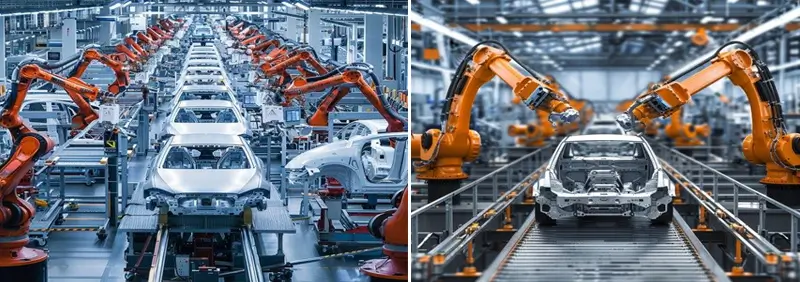
Supporting manufacturers across every vehicle class with AI, data, cloud, and engineering capabilities that improve build quality, plant productivity, and vehicle uptime.
We work across the full engagement lifecycle — from the strategy conversation to the systems that run in production every day — so a roadmap doesn’t stall at the handoff between consulting and delivery.
Value-chain diagnostics, technology and data-platform roadmaps, target operating model design, and electrification and powertrain strategy — grounded in where a manufacturer actually is today, not a generic maturity curve.
Platform and plant engineering, dealer and telematics system implementation, and data & AI solution delivery — built to integrate with the ERP, MES, PLM, and DMS systems already running the business.
Managed support for plant operations, dealer network systems, and warranty and service analytics — with continuous optimization so the roadmap keeps paying off well after go-live.
The detailed capability set behind Advise, Build, and Operate — one connected thread across design, the plant floor, the dealer, and the vehicle in the field.
Platform and component engineering support across two-wheeler, passenger, and commercial vehicle programs
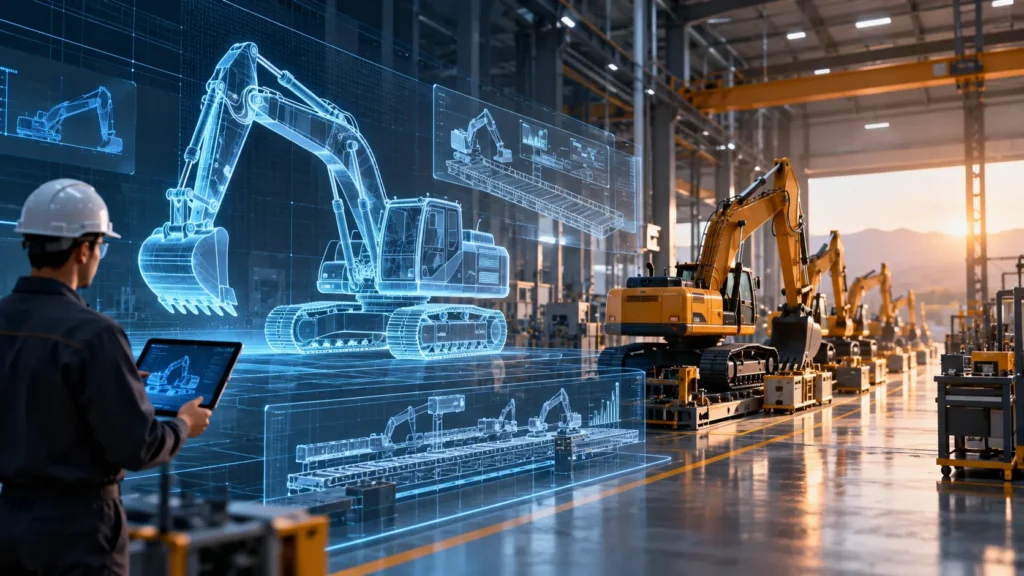
Digital twin and simulation to validate design changes before physical prototyping
Electric powertrain and battery-pack engineering support for e-2W, e-3W, and electric commercial lines
Generative AI-assisted design iteration to shorten concept-to-prototype cycles
Supplier collaboration platforms for engineering-change, quality, and delivery data exchange
AI-driven demand and inventory planning across multi-tier component supply chains
Component traceability from raw material and casting through to sub-assembly
Scenario planning for critical-component and semiconductor supply risk
IoT-enabled predictive maintenance across press, weld, paint, and assembly lines
Cloud ERP/MES integration to synchronize scheduling across multiple plants and vehicle lines
Real-time line monitoring for takt time, downtime, and energy consumption
Digital twin of the shop floor to simulate line changes for new models and variants
Computer-vision inspection at weld, paint, and final-assembly checkpoints
Chassis- and engine-number-level traceability linking build, supplier, and test data
Automated end-of-line testing, calibration, and fitment verification
Emission, safety, and homologation compliance tracking across vehicle classes and markets
Dealer and distributor management system modernization across urban and rural networks
Demand sensing and vehicle allocation planning by model, variant, and region
Digital showroom, configurator, and financing-integration tools for walk-in and online buyers
Dealer performance and inventory-ageing analytics
Predictive parts demand planning to cut dealer and service-center stock-outs
Connected-vehicle and telematics data to flag service needs before breakdown
AI-assisted service advisors for scheduling, warranty triage, and fault diagnosis
Fleet and commercial-vehicle uptime monitoring, route analytics, and driver behavior insights
Warranty analytics feeding corrective action back to design and manufacturing
BXI Technology helps manufacturers build a connected enterprise that spans every vehicle class — from the plant floor to the vehicle on the road. Our approach is built on:
Assess
Baseline the current state across the plant, dealer network, and in-field vehicles: OT/IT landscape, data quality, and telematics coverage across every vehicle class, from two-wheelers to heavy-duty trucks.
Connect
Establish connectivity from shop-floor machines, sensors, and PLCs/SCADA through to dealer management systems and telematics gateways already on the road, so data flows from the casting shop to the customer.
Secure
Apply OT/IT segmentation, secure APIs, and identity controls across the plant network, dealer systems, and connected-vehicle gateways, protecting production, warranty, and telematics data end-to-end.
Integrate
Bring ERP, MES, PLM, dealer management, and telematics/fleet platforms onto a common data backbone, so the production, quality, and service history for every VIN or engine number lives in one place.
Automate
Automate predictive maintenance on the line, end-of-line quality checks, dealer inventory and allocation, and service scheduling and warranty triage using AI and IoT signals.
Analyze
Turn plant, dealer, and vehicle-telematics data into decision intelligence: line performance, dealer inventory ageing, fleet uptime, and warranty root-cause analysis across every vehicle class.
Optimize
Continuously tune production schedules, supplier allocation, dealer stocking, and service-network capacity using analytics feedback loops, closing the loop from field data back to design and manufacturing.
Sustain
Track energy, emissions, and battery-lifecycle metrics across plant and fleet operations, embed governance and compliance controls, and build the capability to scale the model to new plants, models, and vehicle classes.
BXI designs secure, reliable connectivity across the plant, the dealer network, and vehicles in the field. Services include:
Plant network design, edge processing, and local buffering
Secure OT/IT communication and segmented dealer network access
Telematics and connected-vehicle gateway health monitoring
Firewalls and network segmentation across plant, dealer, and cloud systems
Cybersecurity-by-design approach applied consistently across vehicle classes
Plant energy monitoring
EV and e-2W/e-3W battery lifecycle tracking
Fleet and manufacturing emission tracking
Resource optimization
Sustainability KPIs
ESG reporting
Data ownership
Role-based access
Approval workflows
Audit trail
Data retention
Emission, safety, and homologation compliance logs
See how the model plays out across the vehicle spectrum.
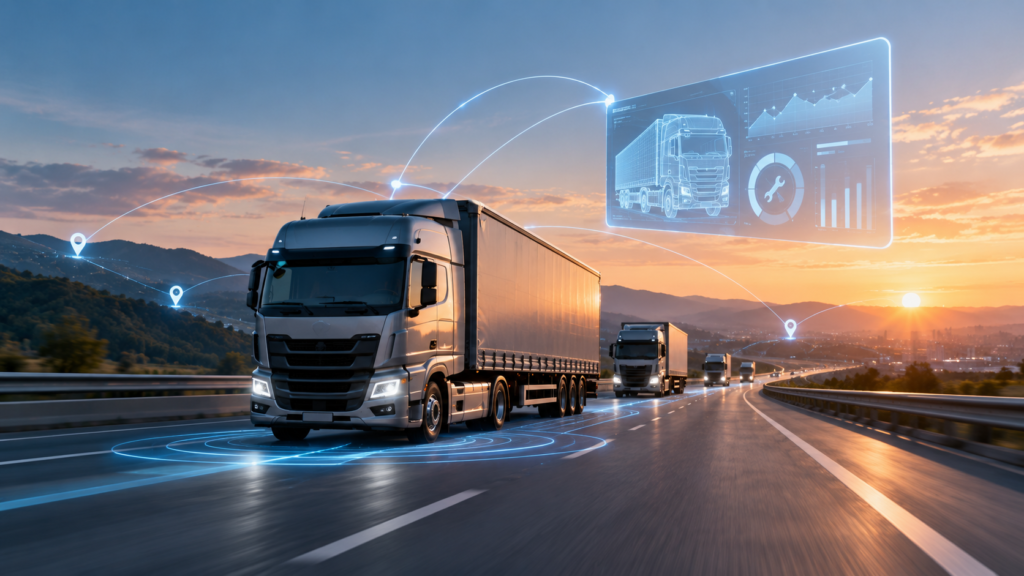
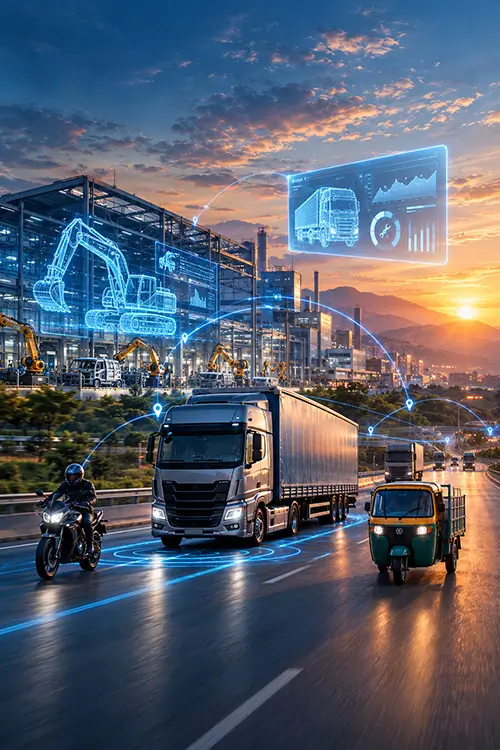
The Software-Defined Truck: What Fleet Operators Should Ask For Next : As commercial vehicles pick up more onboard software, fleet operators are starting to evaluate trucks less like hardware purchases and more like long-term software relationships — what to expect from that shift.
Beyond the Next Emission Norm: Building a Compliance-Ready Plant : Emission and safety norms are not a one-time hurdle; they are a recurring cost of doing business. A look at what it takes to build compliance into the plant rather than bolting it on before each deadline.
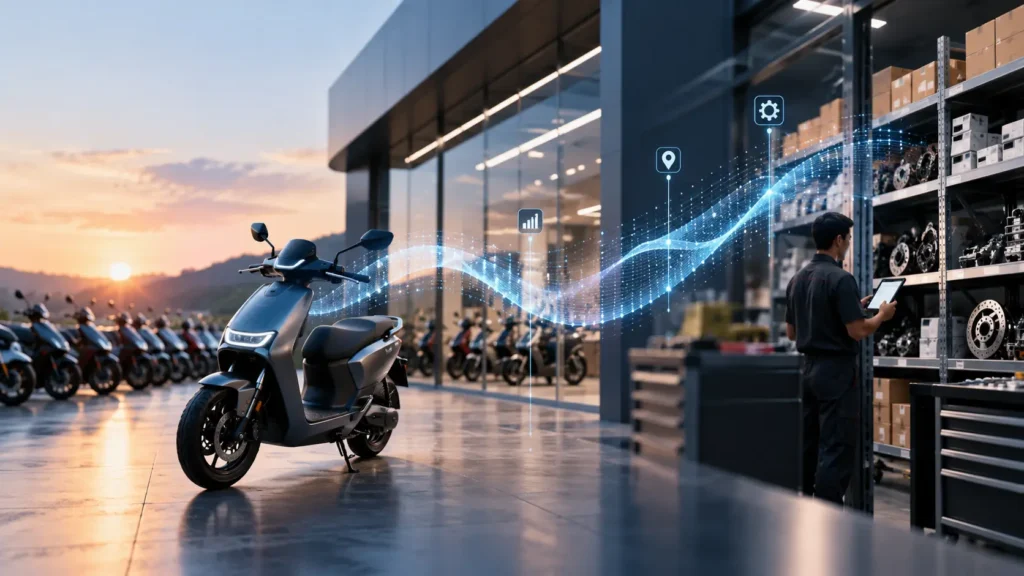
Two Wheels, Every Mile: Telematics at Population Scale : Two- and three-wheelers generate more trips, more often, across more terrain than any other vehicle class. What that means for how telematics and predictive service models need to be designed.
What sets our automotive practice apart.
We work across two-wheelers, three-wheelers, passenger vehicles, commercial trucks, buses, and off-highway and farm equipment — not a single-segment specialist, so plant and engineering patterns proven on one vehicle class transfer to the next.
Our integration model links design, production, and the dealer and service network on a common backbone, so the full build and service history behind any VIN or engine number is traceable in one place, not scattered across systems.
OT/IT segmentation and identity controls are designed into the plant, dealer, and telematics layer from day one, rather than added after systems are already connected.
Warranty claims and telematics signals from vehicles already on the road feed back into design, sourcing, and manufacturing decisions, turning aftersales data into a design input rather than a support-desk record.
The automotive industry is evolving across every vehicle class, with a focus on build quality, dealer-network efficiency, and vehicle uptime enabled by AI and digital platforms. BXI Technology helps accelerate this transformation by integrating engineering, data & AI, cloud, and cybersecurity & GRC to improve plant efficiency and service outcomes.
Revenue growth through productivity and quality improvements
Additional sales through dealer and market expansion initiatives
Support cost efficiency and service-event optimization
Savings across sourcing and operational costs
Let’s build an automotive enterprise that is connected, efficient, and resilient — from the plant floor across every vehicle class to the service bay.